
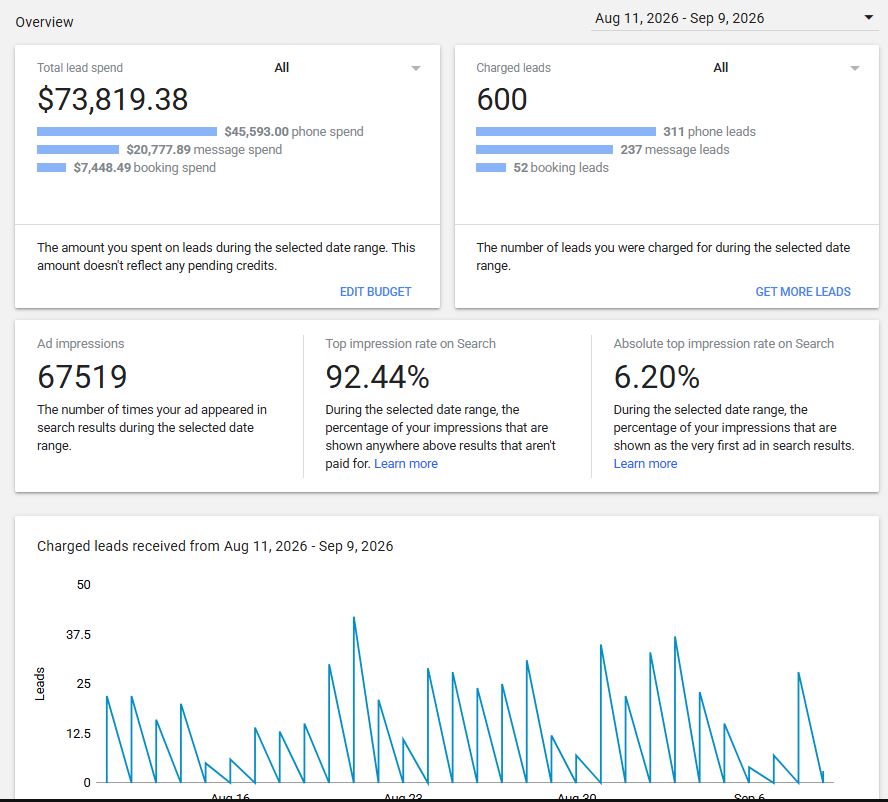
Signs an account needs work
If any of these sound familiar, there is usually money to recover before you add budget.
- Lots of leads but few booked jobs
- Calls for services you do not offer or areas you do not cover
- Budget runs out early in the week
- Rating or review count lagging the businesses beside you
- No one is marking leads as booked, so nobody knows what works
Job type and category alignment
We compare the job types that are switched on with the leads that actually book. Job types that produce small or unwanted work get paused. Ones that bring profitable jobs stay on and get more budget. This is the single biggest lever in most accounts.
Service area configuration
We map where booked jobs came from against where leads came from. Towns that produce leads that never book, often because of drive time or price expectations, get trimmed. Towns that book well can be given more weight.
Lead review and poor fit diagnosis
Every lead gets a look. Some are genuinely invalid under Google's rules, such as spam or a job type you do not offer, and can be disputed. Others are valid but poor fit, which points to a setting to change. And some were good leads that were simply missed. Separating those three is what makes the next decision correct.
Response process and availability
We review missed calls, message reply times and listed hours with you. If the account says open until 8pm but nobody answers after 5pm, the hours should change or the phone handling should. Responsiveness is an operational habit we can measure and improve together, not a setting.
Reviews and reputation workflow
Customers compare ratings on one screen. We set up a simple, consistent way to ask for a review after each completed job, so the profile keeps pace with the work you are doing. No incentives, no gating, nothing outside Google's policies.
Budget allocation
Budget follows two things: what the crew can handle this week and which job types are paying. In busy seasons the limit is often capacity. In quiet ones it is lead quality. We adjust weekly budget accordingly instead of leaving one number in place all year.
Tracking lead outcomes
Where the account allows, we mark leads as booked, completed or lost and keep a simple record of job value. That turns the conversation from cost per lead into cost per booked job, which is the number that actually matters.
Common waste patterns
- Paying for small repair leads when replacement work is the goal
- Running ads during hours nobody answers
- Ignoring disputable leads
- Wide radius pulling leads from towns the crew will not drive to
- Duplicate spend on Search Ads for the same urgent queries without a reason
How LSA connects to your profile, website and search ads
LSA does not stand alone. Homeowners often check your Google Business Profile or website before calling, so consistent names, numbers and services across all three help. If you also run Search Ads, we split roles so the two do not compete for the same urgent search without a plan.
Our optimization cadence
Lead review every week or two. Job types, areas and budget checked monthly. A plain monthly summary of leads, bookings where recorded, disputes and changes made. Bigger structural changes are talked through with you first.